
Navigating freedom camping new zealand rules is straightforward once you understand how local bylaws and self-containment standards work together. To camp legally on public land without paying for a commercial campsite, your vehicle must meet strict national self-containment requirements. This means having a certified fixed toilet, internal fresh water and grey water tanks, and displaying a valid green warrant card. Responsible freedom camping protects the natural environment, supports local communities across both the North Island and South Island, and ensures these spectacular overnight spots remain open for travellers touring Aotearoa in a rental campervan.
What Is Freedom Camping in New Zealand and How Does It Work?
Freedom camping allows travellers to stay overnight in public areas without paying campsite fees. In New Zealand, public land is managed either by local district councils or by the national conservation authority. The nationwide framework balances open access to natural spaces with environmental protection, ensuring that delicate alpine valleys, coastal reserves, and roadside rest areas are preserved for everyone.
When you travel in a campervan, freedom camping is generally permitted on designated public land unless explicit signs or local bylaws state otherwise. Each council establishes specific rules regarding where vehicles can park overnight, how many consecutive nights campers may stay, and whether facilities are required on site. Understanding these local boundaries ensures you can enjoy scenic overnight stops while caring for the land under the principles of the Tiaki Promise.
To verify where you can legally park overnight in any region, always consult official regional maps or visit freedomcamping.org before choosing your spot for the evening. Checking local guidance helps protect pristine habitats and ensures a hassle-free journey from Christchurch through to Queenstown.
What Are the Self-Containment Requirements for Campervans in New Zealand?
Navigating freedom camping new zealand rules is straightforward once you understand how local bylaws and self-containment standards work together.
Self-containment laws require that a vehicle can comfortably support its occupants for several days without discharging waste or relying on external facilities. Under current legislation, a certified self-contained vehicle must store all human waste, grey water, and rubbish internally until it can be emptied safely at a dedicated dump station.
Key requirements for self-containment certification include:
Find your campervan
Certified self-contained fleet · free cancellation up to 14 days · a local Christchurch team.
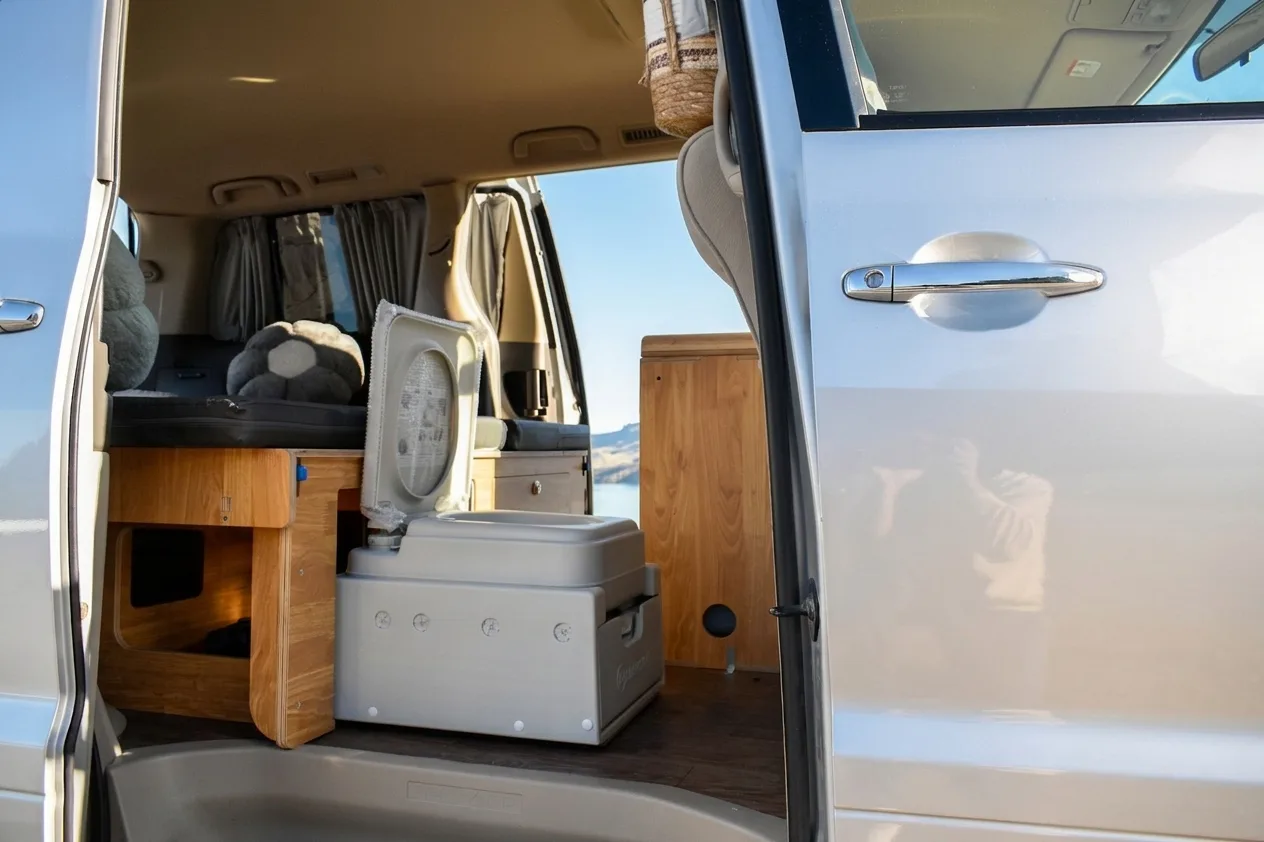
- A permanently fixed toilet system (such as a fixed cassette toilet) that is usable inside the campervan even when the bed is made up.
- Adequate fresh water storage piped directly to a sink.
- A sealed grey water tank connected to the sink drain to collect wastewater.
- A closed, sealable rubbish bin to prevent litter and contain waste inside the vehicle.
- An official inspection certificate and a green warrant card displayed visibly on the front windscreen.
Historically, portable toilets placed loosely in a van were permitted under older regulations. However, updated national standards specify that a portable toilet no longer qualifies for self-containment certification. Vehicles must feature a permanently mounted toilet to meet the rigorous green self-containment warrant criteria.
What Is a Green Warrant for a Self-Contained Campervan in NZ?
The Green Warrant is the official certification sticker issued to vehicles that satisfy national self-containment requirements. Inspected by qualified personnel, this green warrant card confirms that your campervan's plumbing, water storage, and waste management systems are fully compliant with New Zealand law.
Displaying a valid Green Warrant New Zealand sticker on your campervan windscreen signals to council officers and Department of Conservation rangers that your vehicle is fully equipped for responsible freedom camping. Many public sites across the country display clear signage reading "certified self-contained vehicles only." Parking in these areas without a valid green warrant card can result in immediate infringement notices.
When renting a campervan, ensuring the vehicle carries a valid green warrant grants you freedom to use designated self-contained campsites across both islands. Detailed guidance on statutory regulations and vehicle inspection standards is maintained on the New Zealand Government website.
"Responsible freedom camping isn't just about following local bylaws—it is about honoring the land, leaving no trace, and keeping New Zealand's wild places pristine for generations to come."
Where Can You Find Legal Freedom Camping Sites in New Zealand?
Finding legal freedom camping locations across New Zealand requires checking local council bylaws and national conservation site directories. Designated freedom camping sites exist in rural regions, scenic lakefronts, and near coastal reserves, offering stunning views and tranquil overnight stays.
Public conservation lands are managed by the Department of Conservation. Many DOC campsites and designated conservation areas permit overnight stays for certified self-contained campervans. Complete listings of conservation areas, facilities, and regional rules are available on the Department of Conservation website.
Local council rules vary significantly between districts. For instance, urban areas in Christchurch or Queenstown enforce strict local bylaws restricting overnight parking near town centres, while rural inland councils provide dedicated designated camping sites near key road trip routes. Always pay attention to localized street signage, which clearly indicates whether overnight parking is permitted or prohibited.
What Happens If You Get Caught Freedom Camping Illegally in New Zealand?
Enforcement officers regularly patrol popular freedom camping spots, coastal car parks, and scenic reserves across the country. If you park overnight in a prohibited area or camp in a non-self-contained vehicle at a site reserved exclusively for certified self-contained campervans, you risk receiving an instant infringement fee.
Local councils and conservation authorities issue infringement notices under the Freedom Camping Act 2011 to curb illegal waste dumping, littering, and unpermitted parking. These fines apply directly to the driver or vehicle hirer and are strictly enforced across all regions.
Beyond financial penalties, illegal camping damages delicate eco-systems and creates friction with local communities, which can lead to further site closures. Staying at permitted sites, respecting local restrictions, and practicing leave no trace camping ensures that public camping locations remain open for everyone.
What Does a Self-Contained Rental Campervan Need to Have in NZ?
When selecting a rental vehicle for your New Zealand road trip, confirming its self-containment features is essential if you plan to freedom camp. A well-designed self-contained campervan balances compact, easy-to-drive dimensions with all necessary living facilities inside the cabin.
Every certified rental campervan must feature a plumbed sink connected to fresh water, a properly vented grey water tank, an internal rubbish bin, and a permanently installed fixed cassette toilet. Proper interior light blocking also ensures privacy and rest during long summer evenings, which you can learn more about in this guide on how to choose the best blackout curtains for your campervan.
Having integrated waste management and fresh water capacity lets you stay self-sufficient in remote areas without needing to visit a holiday park every night, making your road trip both flexible and rewarding.
What Is the Best Rental Campervan for Freedom Camping in NZ?
For travellers seeking a compliant, comfortable, and efficient vehicle for exploring Aotearoa, the Koru Campervan from Rent-A-Camper is engineered specifically to meet all modern self-containment standards. Featuring a certified Green Warrant, a permanently installed fixed toilet system, and integrated fresh and grey water storage tanks, the Koru allows you to freedom camp legally and responsibly across both the North and South Islands.
Designed for easy driving along winding alpine passes and coastal highways, the Koru offers an ideal balance of practical interior layout and reliable engineering. Whether you are setting off from Christchurch toward Lake Tekapo or exploring the wild reaches of the West Coast, having a fully compliant self-contained vehicle ensures complete peace of mind.
Plan your New Zealand adventure today with Rent-A-Camper. Explore our full fleet of certified self-contained campervans, check live availability, and secure your vehicle for an unforgettable, flexible road trip across New Zealand's breathtaking landscapes.
Frequently Asked Questions
Where can you freedom camp in New Zealand?
You can freedom camp on public land where local council bylaws or Department of Conservation rules permit overnight stays. Certified self-contained campervans have access to designated freedom camping spots, DOC campsites, and regional reserves across both islands, provided no local prohibition signs are displayed.
Does a rental campervan need a fixed toilet to freedom camp legally?
Yes, under national self-containment regulations, a campervan must feature a permanently mounted fixed toilet to qualify for a green self-containment warrant. Portable toilets no longer meet the certification standards required for freedom camping on land designated for self-contained vehicles only.
How do you find public dump stations for waste disposal?
Public dump stations are located throughout New Zealand in major towns, near holiday parks, and at select service stations. These designated facilities allow you to empty your cassette toilet and grey water tank safely while refilling your fresh water tanks before continuing your journey.
Can you freedom camp without a Green Warrant?
No, you cannot freedom camp in areas marked for certified self-contained vehicles unless your campervan displays a valid green warrant card. Non-certified vehicles must stay at commercial holiday parks or serviced camping grounds with public toilet facilities.
Freedom Camping Rules in NZ: New Regulations for 2025 and How to Stay Legal in a Campervan
